When the AI Played With Her
On artistic intent, human performance, and what happens when AI gets good

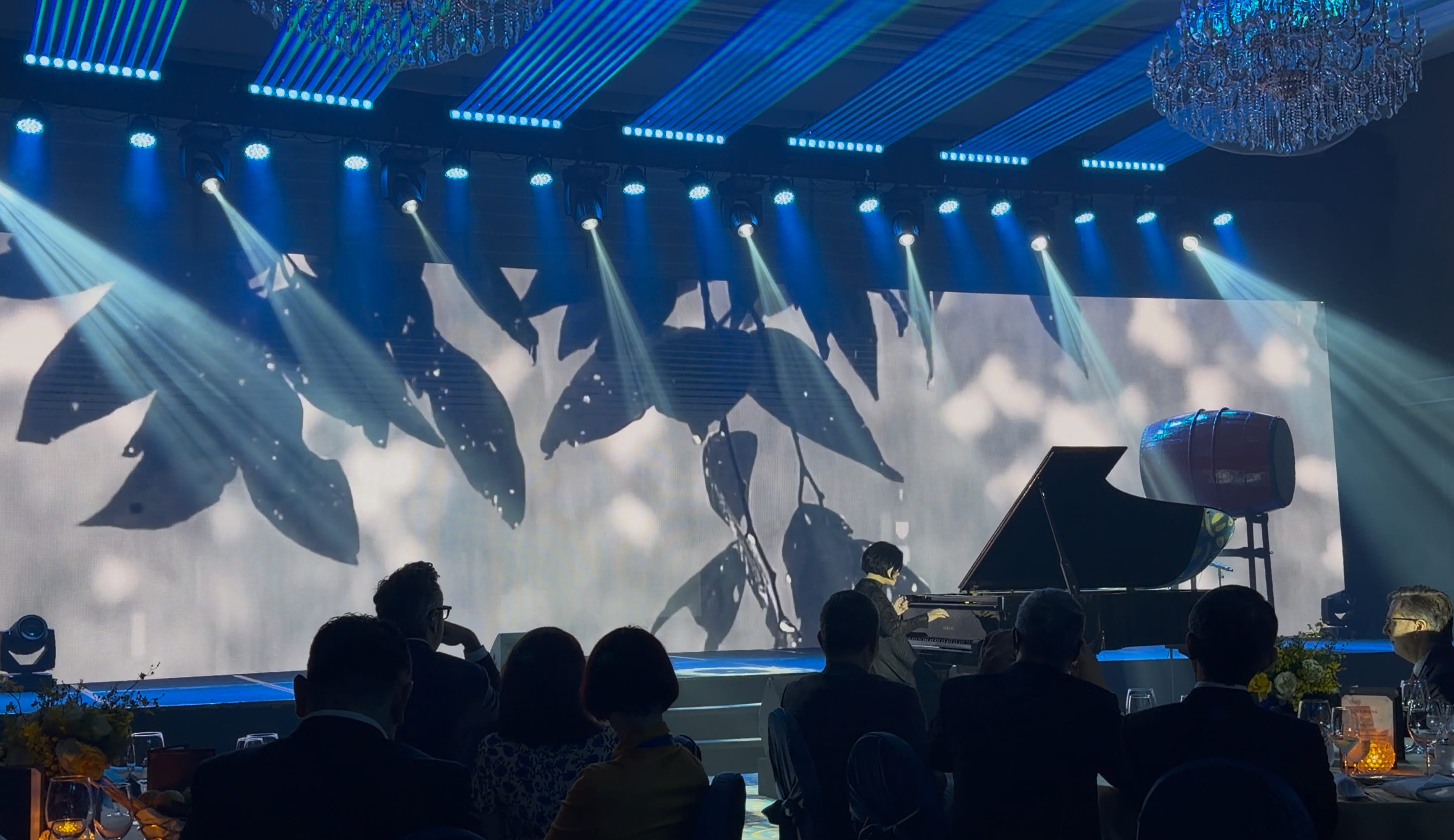
Recently, in Ho Chi Minh City, I watched Trang Trinh perform “Waltzing Rain,” by Trang Trinh feat. Gen AI.
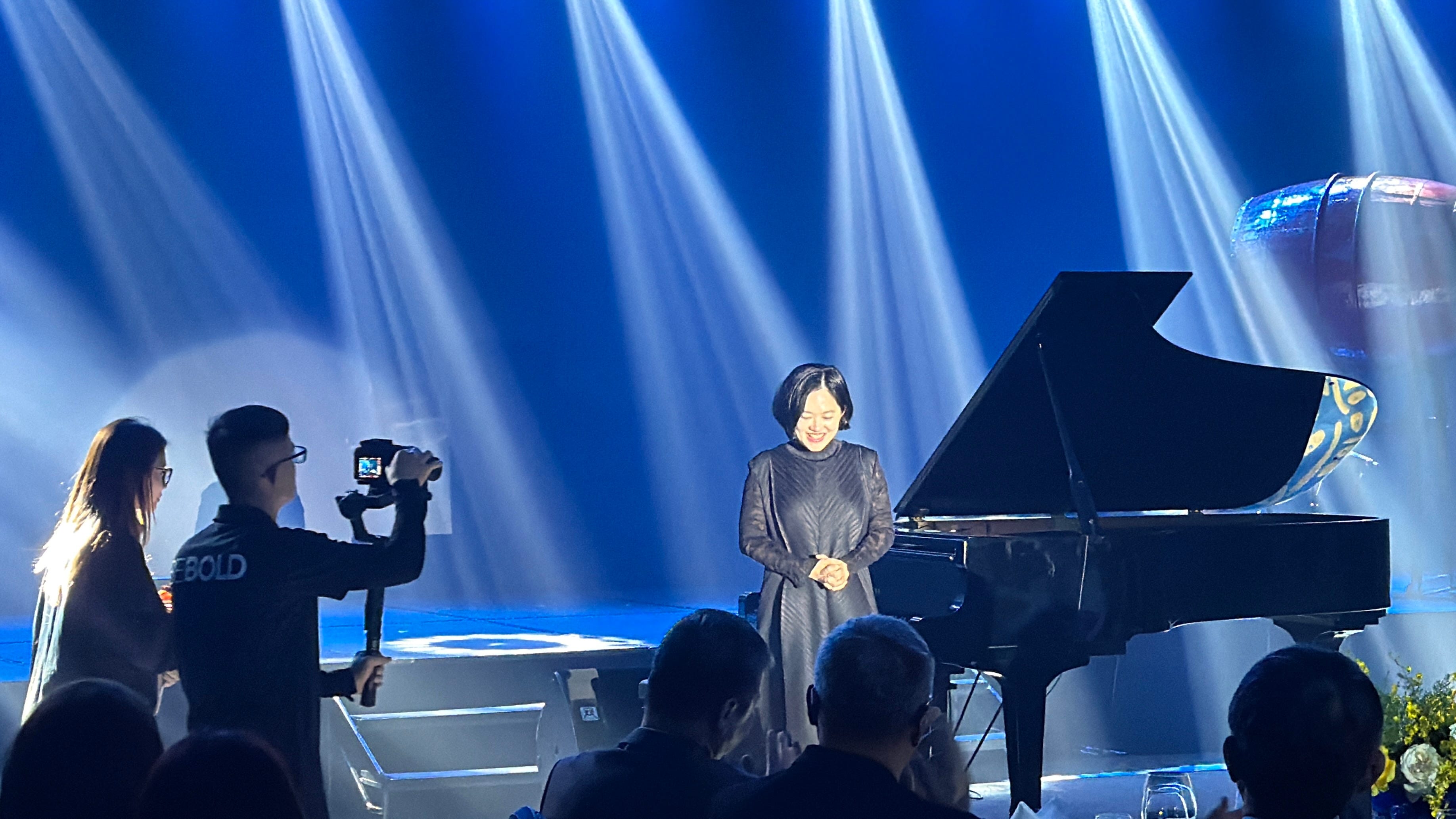
This was at the Asia Rising Gala Reception, where Trang had been invited to perform. I already had a view about AI-generated music long before that evening. It wasn’t about whether the technology could produce something polished or complex. I knew it could. The concern was harder to pin down. When we listen to music, part of the experience is the sense that another consciousness chose this note, this pause, this turn. Once I knew the source was synthetic, I expected some distance. I thought I would hear the music through that fact, not just feel it.
This was not a new thought for me. I had said some version of it years earlier. Around 2015 or 2016, I was at a scientific conference in Singapore. A team presented work on transforming a speaking voice into a singing voice; they could take someone’s reading aloud and make it sound like they were performing a song. My colleague was floored. He joked that he wanted that technology because he had always been terrible at karaoke. We laughed, but I also protested. I remember saying that once I know something has been synthetically generated, the magic is gone for me. I meant it.
So when I learned that Trang would be performing with AI-generated material, I was curious right away. I had not yet met a classically trained pianist with Trang’s background who was willing to engage with the technology this openly in performance.
Then the performance began
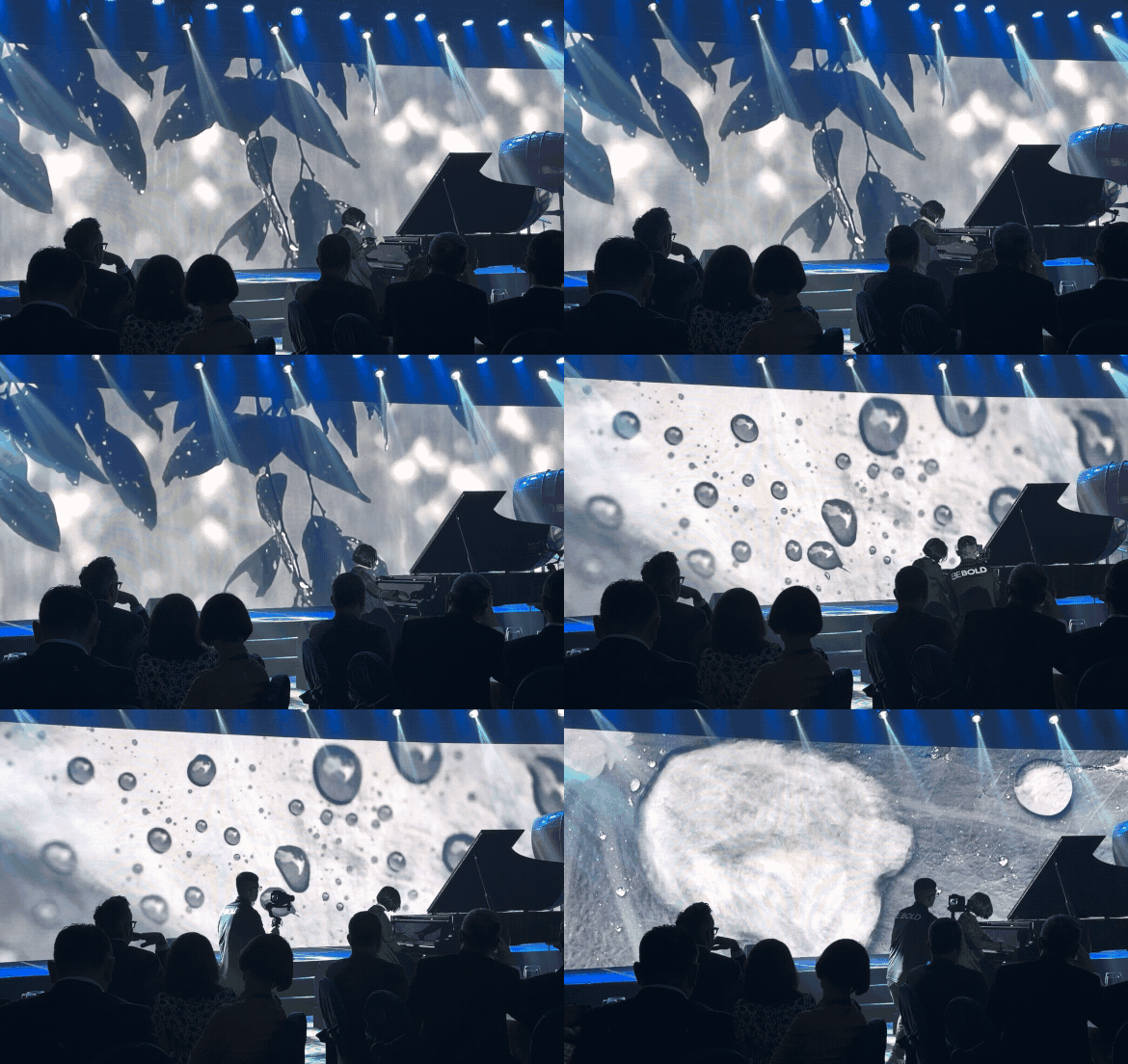
Once she began, I watched her hands.
Trang is not someone you would casually expect to embrace generative AI. She comes from a serious musical tradition. She trained at the Royal Academy of Music in London, co-authored Vietnam’s national music curriculum, founded the country’s first El Sistema program for underprivileged children, and now leads a multidisciplinary electronic arts foundation in Vancouver. She could easily have taken a purist line on this. She did not.
And it was beautiful.
I did not expect the performance to close that distance so quickly.
Trang hardly needs my trust as validation; her work speaks for itself. But being her friend has let me see something more personal—how she attends to art. We once walked through MoMA together and ended up standing in front of a Monet, saying almost nothing, and staying there longer than we meant to. I wrote about that experience before, and a version of the same idea returned during her performance at Reverie Saigon, just in a different medium. Complexity often registers first as a whole. The parts count, of course, but meaning does not arrive piece by piece in a neat sequence.
I was fascinated to be thinking about that while I watched her play.
Trang later joked that the piece was “technically” very easy to play. That may be true in the narrow way musicians mean it, but I thought it still missed what was happening.
The generated music had already been shaped before she ever sat at the piano. What I noticed was how she played with it; her timing, the restraint, the way each entry felt placed, the way she pressed the keys. I noticed. I noticed how she made room for the generated material while keeping the human presence unmistakable. You could feel that a person was shaping what we were hearing.
I should say here that I am not a music expert. I love music, and I pay attention, but I am not going to pretend I can analyze Trang’s composition in technical detail. There was a time when I might have studied music formally instead of physics. What I can speak to is what I saw and felt in the performance.
To be fair, I am not sure the generated music on its own would have moved me, even if Trang had been the one who prompted it. What moved me that evening was the performance. Her playing gave the material shape, contrast, and human presence. It closed the distance I had expected to feel.
Why it landed
A little music theory helps, but only a little. A performance does not move us one note at a time. Meaning builds through relation; tension and release, timing, repetition, surprise, tone color, silence. Then there is the listener, who is never neutral. Mood, memory, grief, fatigue, longing, joy; all of that enters the room, too. We do not hear music in a vacuum. We hear it through whatever we already are that day.
That part I know from experience. I love music in the ordinary, vulnerable way many people do. Some songs can still make me cry, not because I am analyzing their structure in real time, but because music attaches itself to memory, to seasons of life, to former selves. It catches you when you are already open, or tired, or missing someone, or remembering a version of your life you did not expect to visit again that day.
That is why I thought AI-generated music would leave me cold. I thought the knowledge of its synthetic source would interrupt the feeling and weaken the bond.
It did not. At least not in that room, in that performance, with that artist.
Artistic intentionality
Later, after I sent her a note about the performance, Trang replied with something exact: the AI did not have artistic intentionality.
A human composer chooses from somewhere. Out of training, taste, memory, instinct, discipline, feeling, structure. Generative AI does not have that kind of inward source. It has pattern, probability, training data, refinement. It can produce “beautiful” material. That is still different from meaning it.
She was not dismissing the experience. She was being precise about it.
Music and technology have always been entangled. Synthesizers changed what counted as musical sound. Recording changed what counted as performance. Studio tools and pitch correction changed what many people hear as normal. Generative AI belongs in that history, though it presses closer to authorship than most earlier tools did. People feel uneasy for good reason.
What Trang’s performance showed me is that the intentionality did not disappear. It lived in the prompting, the selection, the decision to keep one output and discard another, and then in the performance itself; the way Trang shaped the whole experience, turning the AI-generated material into art.
That actually feels consistent with the rest of her life in music. If you look at her body of work, she has spent years asking what music is for, not only what it sounds like. She built programs for children who would otherwise have little access to serious music education. She helped shape a national curriculum. She now works across electronic and multidisciplinary art. The AI feels less like a break from that practice than a continuation of it.
Why this matters beyond one performance
I told Trang that we are watching these questions closely in the Philippines, too, because we have to. The Philippines has a large and vibrant creative industry. More than that, we live through music and performance in a way that runs deep into ordinary life. Song is part of family life, public life, celebration, grief, memory, aspiration. So the arrival of generative AI in the arts is not some niche issue for technologists. It touches labor, identity, what younger artists will believe counts as craft, and what audiences will continue to recognize as real.
Trang’s response was grounded. She said she is less scared of the technology now that she has worked with it. It feels more like a tool than a threat. She also said that artists should honestly and fiercely explore GenAI. Her own words.
She is right.
Of course, the economic questions remain, and they are real. None of this answers what happens to session musicians, commercial composers, voice actors, teachers, performers, and the many people whose creative work is also their livelihood. It does not answer what happens when synthetic output becomes cheap, fast, and good enough for clients who were never paying for depth in the first place. Those concerns deserve far more than a passing nod.
Still, “replacement” feels too simple as a frame here. The AI did not replace Trang. It generated material she could choose, shape, and perform with. The value was in the response.
I asked Trang to tell me more about her process someday. How she prompts. How she listens to the outputs. What her relationship with the technology feels like now. I want that conversation because artists like her are working something out in public before the rest of us fully have language for it.
Understanding often works that way. Experience first. Language later.
For now, what I know is that I watched my friend Trang Trinh perform with music generated by an AI she prompted, and the performance was beautiful. There is no need to credit the machine with artistic intent; that remained entirely with her.